
Gum disease generally develops gradually, starting with mild gum inflation and potentially progressing to serious infection, bone loss, and tooth loss if left untreated. Early stages are often painless and easy to miss; many people don’t realize they have gum disease until it has already advanced. Understanding how gum disease progresses can help you recognize early warning signs and seek professional care before permanent damage occurs.
What Is Gum Disease?
Gum disease, also known as periodontal disease, is a chronic infection of the gums and the structures that support your teeth. It begins when plaque and bacteria build up along and below the gumline. Over time, the bacterial buildup triggers inflammation and infection that can gradually damage gum tissue and bone, leading to gum and bone loss.
Rather than appearing suddenly, gum disease progresses through distinct stages. The earlier it is detected, the easier it is to treat. The rate of progression for your gum disease is often dictated by an individual’s immune system.
The Earliest Form of Gum Disease: Gingivitis
The first and mildest form of gum disease is gingivitis. At this stage, plaque and bacteria irritate the gums, leading to inflammation. Gums may appear red or swollen and may bleed during brushing or flossing. People may also notice persistent bad breath at this stage.
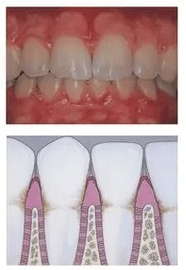
Example of Gingivitis
Gingivitis affects only the gum tissue and does not involve bone loss. At this stage, it is considered completely reversible. With professional dental cleanings and consistent daily oral hygiene, the gum health can be restored often within a few weeks.
When Infection Spreads Below the Gumline
If gingivitis is left untreated, the infection can progress into early periodontitis. At this point, inflammation causes the gums to pull away from the teeth, creating small spaces known as periodontal pockets. These pockets allow bacteria to collect below the gumline, where brushing and flossing can’t effectively remove this bacteria.
Although symptoms may still be mild, oftentimes irreversible damage is already occurring below the gums. Professional periodontal treatment is necessary at this stage to remove bacteria, minimize gum and bone inflammation, and slow down further progression of the disease.
Ongoing Gum Disease and Bone Loss
As gum disease continues, it can advance into moderate periodontitis, where infection destroys more bone and connective tissue that support the teeth. Gum recession becomes more noticeable, and teeth may feel sensitive or uncomfortable when chewing.
Bone loss at this stage can lead to subtle tooth movement or changes in how the teeth fit together. Without treatment, periodontal disease will continue to progress leading to further gum and bone loss which leads to long-term tooth instability. Periodontal disease can still be treated at this stage and patients are able to retain teeth with good oral hygiene and periodontal maintenance.
Severe Periodontal Disease and Tooth Instability
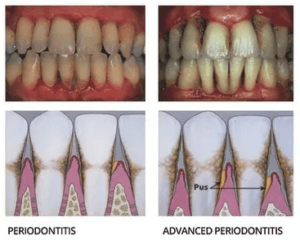
Example of Periodontitis and Advanced Periodontitis
The most advanced form of gum disease is advanced or severe periodontitis. Significant bone loss has occurred at this stage and teeth may become loose, shift position, or fall out. Chewing may be painful and signs of active infection, such as swelling or discharge may be present.
Although damage from advanced periodontitis cannot be reversed, specialized periodontal care can help control infection, preserve your remaining teeth, and protect your overall oral health.
Gum Disease Is Treated at Different Stages
Treatment for gum disease depends on how far it has progressed. Early stages often respond well to non surgical treatment and improved oral hygiene. More moderate to advanced stages typically require a combination of non-surgical and surgical treatments to remove bacteria from below the gumline and treat the supporting tissue around your teeth. In severe cases, additional periodontal procedures may be necessary to reduce infection and stabilize the teeth.
A periodontist is a dental specialist with advanced training in diagnosing and treating gum disease at all stages.
When to Consider Seeing a Periodontist
Bleeding gums, gum recession, persistent bad breath, loose teeth, or a diagnosis of periodontal disease are all signs that a periodontal evaluation may be beneficial. Early evaluation often leads to simpler treatment and better long-term outcomes.

Preventing Gum Disease from Progressing
Maintaining good oral hygiene, attending regular dental visits, avoiding tobacco products, and maintaining good general health all help reduce the risk of gum disease. Most importantly, addressing symptoms early can minimize the progression of the disease before permanent damage occurs.
Protecting Your Gum Health
Gum disease does not resolve on its own, but it can be effectively managed with professional care. Understanding how gum disease progresses empowers you to recognize symptoms early and take steps to protect your oral health.
If you have concerns about your gums, contact us today. We can provide clarity, guidance, and peace of mind.